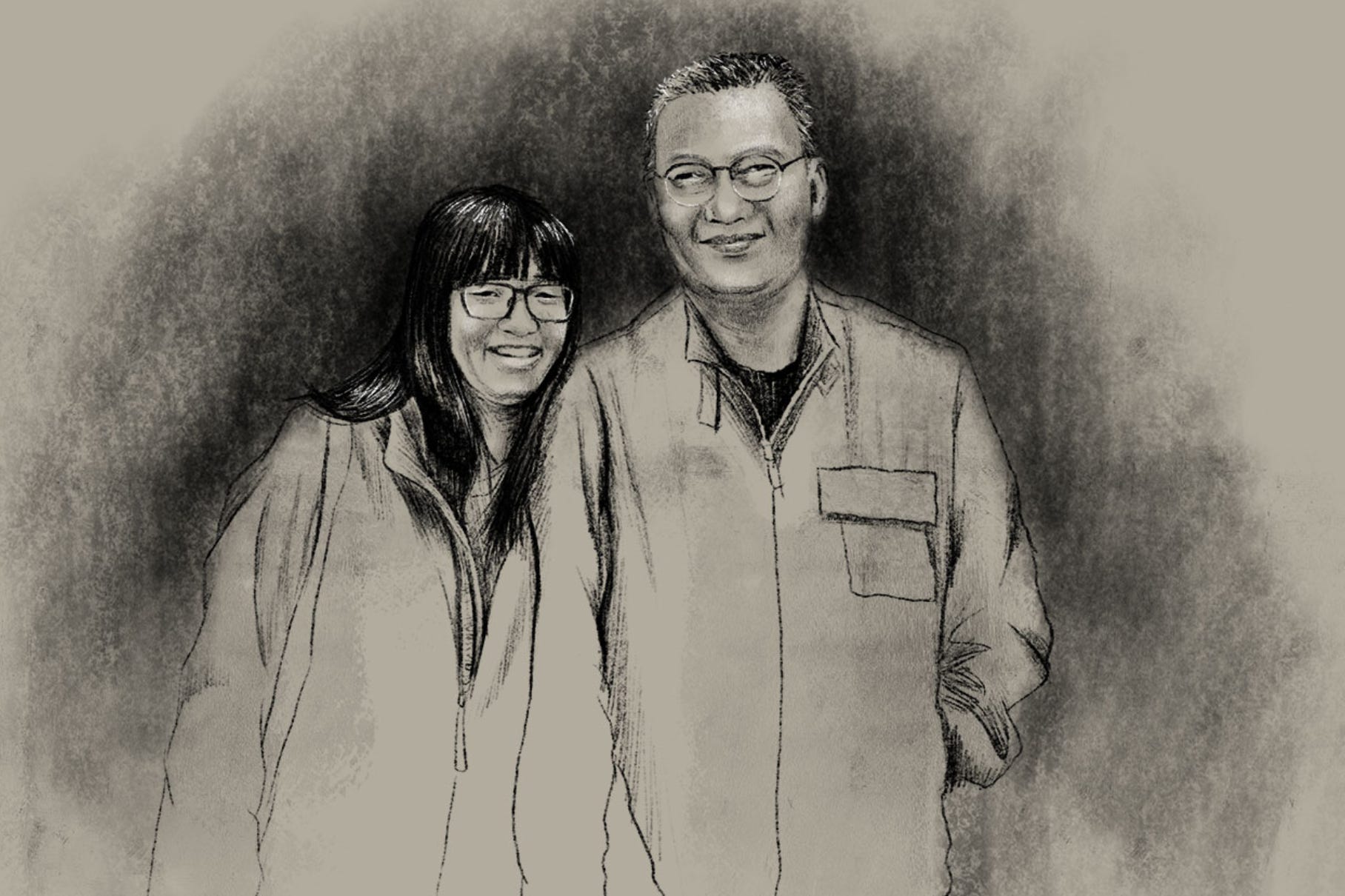
Meeting
Fiancé' Ye Du's homage to Chow Hang-tung on her 40th birthday

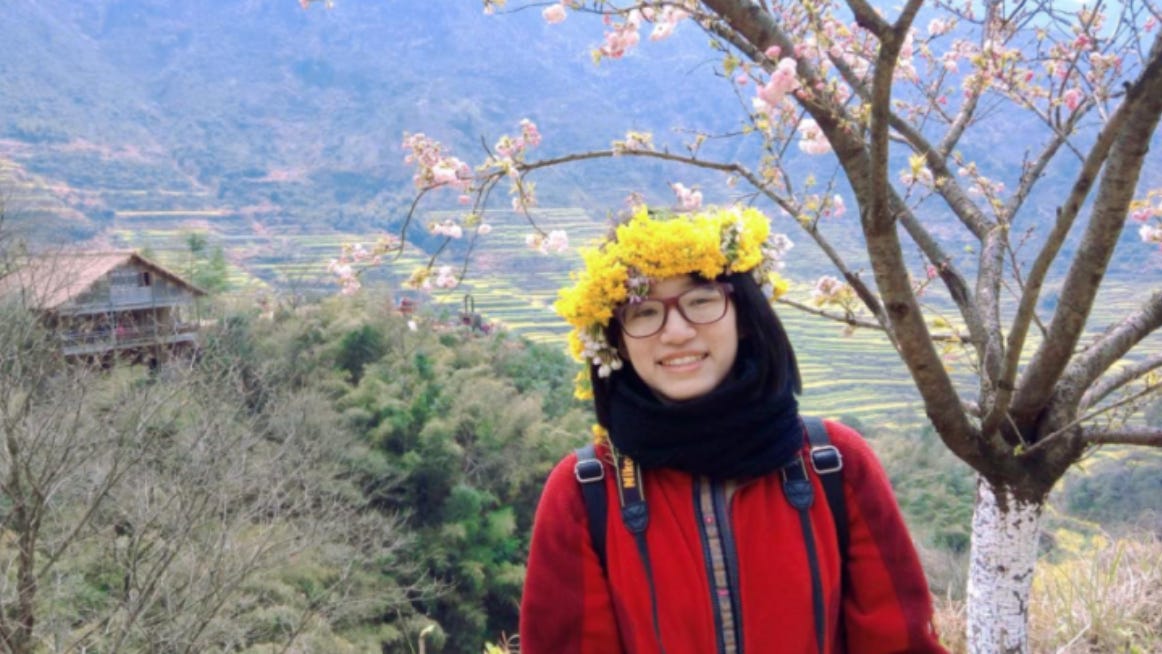
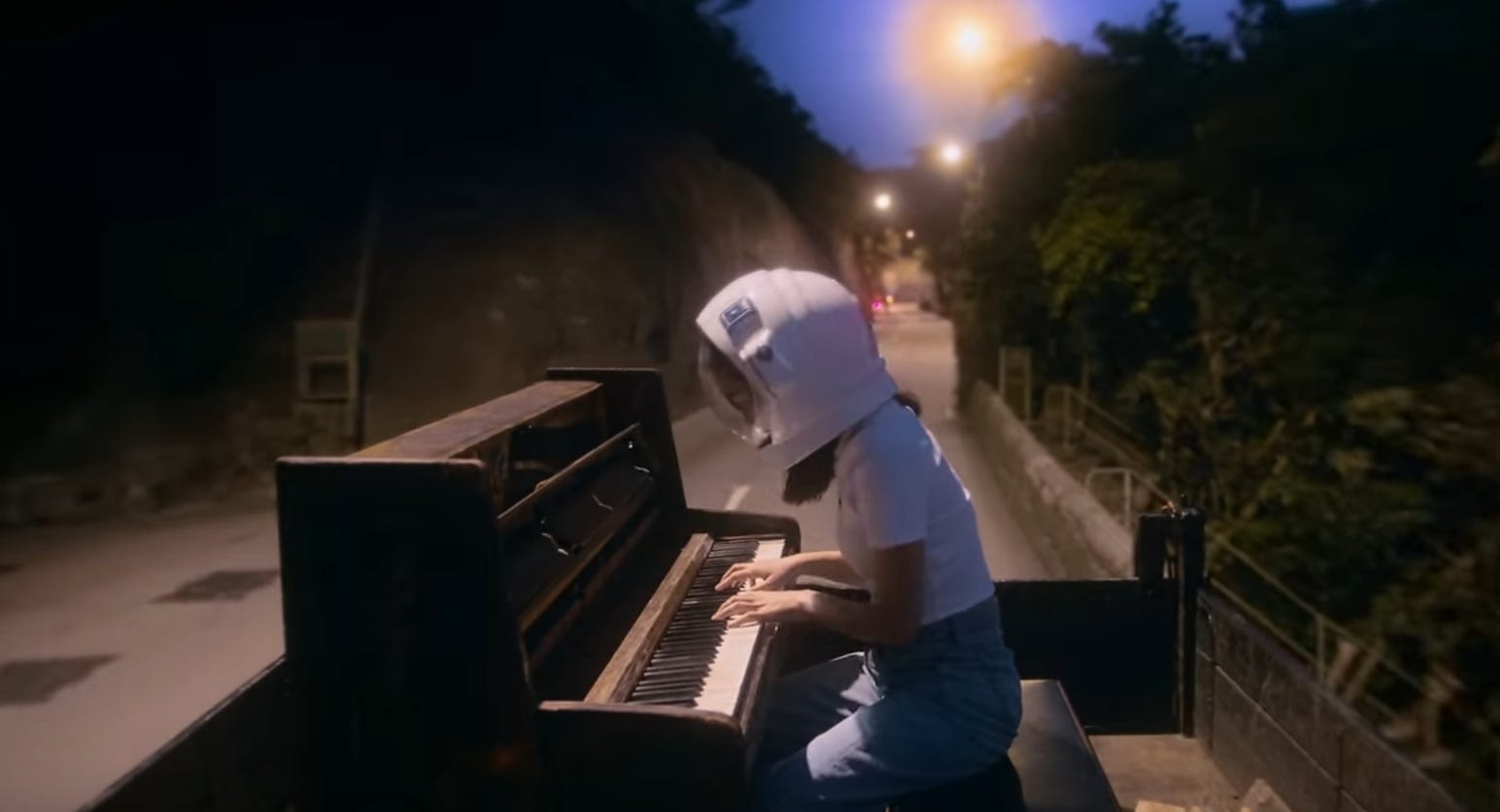
Today is Hong Kong political prisoner Chow Hang-tung’s 40th birthday, and her fourth behind bars, where she’s been ever since her arrest on September 8, 2021. She’s been prosecuted in several trials, but right now she’s actually on remand at Tai Lam Centre for Women, a maximum-security women’s prison in Tuen Mun. She herself put out a statement on her birthday. Ever since seven people, including relatives, were arrested in May 2024 for posting her messages on a Facebook account dedicated to her, her messages to the public have had to take more circuitous routes and have been phrased in ever-more coded language, which is as things go in increasingly authoritarian societies like Hong Kong intent on censoring speech. This is her birthday message: “Hi everyone (friends I miss, friends who miss me, and comrades I know and don’t know): “Today is my birthday and thank you all for your blessings! 💛🙏🏼💛 . I’d also like to share with you the song "You Gotta Screw Up At Least Once" (《至少做一件離譜的事》). Here is the essence of the lyrics: "Surrendering ages you;Resigning to fate crushes you." Haha! In solidarity with you all! Hang Tung.” I think in solidarity with her, it would behoove us all to listen to that song at least once today (or whenever you happen to read this). I like the video because all it does is show a woman in an astronaut’s helmet (presumably Kiri T) riding around in the back of a truck playing a piano on a winding Hong Kong country road as the day dawns. At a certain point, an HK mini-bus drives up behind her. For those in exile like myself, just seeing the siu-ba (Cantonese for mini-bus) provokes a little thrill of recognition that says “home!”
I have no feeling for Cantopop at all. On the surface, “You Gotta Screw Up At Least Once” sounds like a typical love song (which may have just been Hang-tung’s point in quoting it). So I asked a Cantopop lover who said, “Well, if you wanted to read political undertones into it, you could,” then added, “After all, just about every statement in Hong Kong these days is inflected by the times.”
A few days before her birthday, Hang-tung’s fiancé, Chinese activist Ye Du, published an article on January 19 in Hong Kong newspaper, Ming Pao, titled simply, “Meeting” (《遇見》), which I take to be a tribute or message to Hang-tung. The reason I say “I take it to be” that is that the piece doesn’t actually mention Hang-tung by name. And the fact that it doesn’t contains a whole history of censorship in Hong Kong in the new authoritarian era.
I’m surprised Ming Pao even still publishes articles by people like Ye Du. Ming Pao’s tried its best to avoid the opprobrium of the authorities in the new authoritarian era, yet has still been criticized by them multiple times, leading among other things to the discontinuation of a regular column by popular satirical cartoonist Zunzi.
As recently as a year ago, an article by Ye Du in Ming Pao was censored: Authorities in at least three prisons actually clipped it out of copies of the newspaper before giving it to prisoners. This came after CCP-owned Wen Wei Po decried the article as propaganda intended to incite people’s emotions. The article in question was a love letter to Hang-tung.
So while it’s a surprise to me that Ming Pao is still publishing Ye Du, it’s no surprise that his piece about Chow Hang-tung doesn’t mention her. We’ll see if prison authorities clip this one as well.
The following is a translation from the original.
Meeting
by Ye Du
published January 19, 2025 in Ming Pao
1.
In Haruki Murakami’s homage to Orwell’s 1984, 1Q84, Aomame says, “It would have been nice to meet you earlier. Then we wouldn’t have had to go through so much trouble.” Tengo shakes his head and says, "No, I don't think so. This is fine. Now is the right time, for both you and me."
Yes, the meeting of two people should not be too early or too late. If it is too early, they may not know how to love and how to cherish love; if it is too late, they may lose the passion and courage to love. Eileen Chang also wrote in "Love," "Among thousands of people, you meet the person you meet. In thousands of years, in the endless wilderness of time, you meet him/her not a moment earlier, not a moment later, just in time. When I met you, everything was just right. Before darkness covered the world, my eyes had gazed deeply at you. After darkness covered the world, my gaze has never left you.”
2.
The encounter between people in Murakami is his way of "healing" the loneliness and helplessness caused by the collision between people and the times in which they live. It is an exploration of life in the "cold wonderland" of postmodern consumer society.
In 2021, the movie “Drive My Car,” directed by Ryusuke Hamaguchi and adapted from Haruki Murakami's short story, had a great influence in the film industry and won many international awards, including an Academy Award. The film is, as always, a Murakami-style healing of the pain of the urban masses. Chekhov's play, “Uncle Vanya,” is the core of the film, but when Murakami and Chekhov meet in the same text, the difference is obvious.
At the end of the film appears Sonya's classic monologue: “What can we do? We must live our lives. Yes, we shall live, Uncle Vanya. We shall live through the long procession of days before us, and through the long evenings; we shall patiently bear the trials that fate imposes on us; we shall work for others without rest, both now and when we are old; and when our last hour comes we shall meet it humbly, and there, beyond the grave, we shall say that we have suffered and wept, that our life was bitter, and God will have pity on us. Ah, then dear, dear Uncle, we shall see that bright and beautiful life; we shall rejoice and look back upon our sorrow here; a tender smile—and—we shall rest. I have faith, Uncle, fervent, passionate faith. We shall rest. We shall rest. We shall hear the angels. We shall see heaven shining like a jewel. We shall see all evil and all our pain sink away in the great compassion that shall enfold the world. Our life will be as peaceful and tender and sweet as a caress. I have faith; I have faith. My poor, poor Uncle Vanya, you are crying! You have never known what happiness was, but wait, Uncle Vanya, wait! We shall rest. We shall rest. We shall rest.” In the film, this was expressed in sign language, a charming, typical Japanese style of fresh healing.
As one of the most important plays in the history of European drama, “Uncle Vanya” would not be worthy of its status if it was just a tearful affirmation of life and hope, and it would not have been performed by almost every famous theater company. Facing the dark era of cruel despotism, “Uncle Vanya” is Chekhov's criticism of this suffocating society and a refuge for shattered dreams. It is a drama with the most desperate wail, the sound of shattered dreams, a roar against fate while crawling in the abyss, conveying the feeling of being born in a dark age where "everyone who is alive is depressed,” with compassion for all sentient beings who are struggling and have no place to live.
There are a thousand Hamlets in the eyes of a thousand people. In free societies, the classics are continually reinterpreted and performed according to their current reality. Among the versions I have seen, the one whose understanding of “Uncle Vanya” is similar to that of Haruki Murakami but slightly better in structure is that of the famous British director Ian David Rickson, which premiered in 2020 during the pandemic.
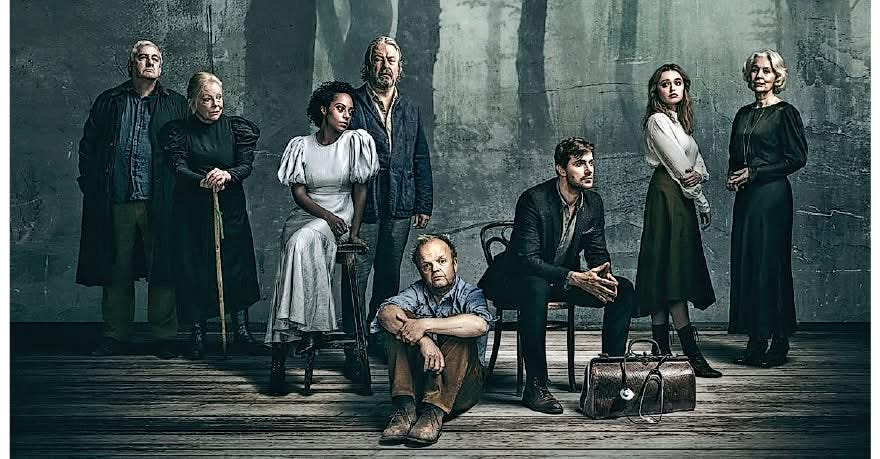
The Pinter Theatre's video release of the production aims to bring hope to people who are rebuilding their lives in the darkness. Sonya's classic lines here express a desire for redemption: No matter what, don't give up hope.
Human joys and sorrows are not shared. It is difficult to feel the deep sorrow and despair if you are not there. My favorite version of "Uncle Vanya" is that directed by Tuminas after he became the artistic director of the Vakhtangov Theatre in Russia in 2007 and won the Golden Mask, the highest award in Russian drama. Sonya's lines at the end of this version are no longer peaceful and soothing but hysterical. She uses the most desperate roar in the history of drama to express the suffocation, suffering and anger of the Russian people in the already stagnant time.
3.
Chekhov saw the decay and decline of the autocratic system. The whole country was like his story, "Ward No. 6," where mentally ill patients and muddle-headed doctors were locked up together. On the one hand, there is the cold and autocratic power, and on the other, the ignorant people. “The strong are arrogant and lazy, the weak are ignorant and live like animals, and everywhere there is unbelievable poverty, overcrowding, degradation, drunkenness, hypocrisy, lies...” (from Chekhov’s “Gooseberries”).
The profundity of Chekhov lies in the fact that he tried to light a bright lamp in the dark night with the warmth of his soul: "The night outside, the infinite distance, countless people—all are related to me." The theme of "Uncle Vanya" is the destruction of idols - the collapse of lies that were once believed, the pain of being deceived, and the expectations for the future after waking up from a nightmare.
4.
Chekhov died of illness in 1904.
The history of mankind is the history of emerging from one dark age after another. Hannah Arendt says in her book, Men in Dark Times, that when the public sphere is abolished and people cannot express themselves or communicate with others in that arena, light is extinguished and the dark age comes, filled with injustice. The rage at injustice and the despair of "only injustice and no resistance to it" are all hidden until the moment when disaster falls on everything and everyone; not hidden by reality but instead obscured by the grand rhetoric and empty words of almost all officials, who constantly explain away inconvenient facts to excuse their actions.
Hannah Arendt poses the pointed question: What should an individual do if he or she is unfortunately faced with a dark age? How to find light when living in darkness? Hannah Arendt believes that even in the darkest times, people still have the right to hope for light, and that light comes not so much from theories and ideas as from certain men and women, from the light emitted by their lives and work: "It is those who do not give up hope in the darkest moments, with their tenacity and courage, who weave the most dazzling halo in history."
When I was young, Hannah Arendt's works had a profound influence on me.
5.
A friend said to me, “How lucky you are to meet each other in such a vast crowd of people; how unfortunate you are to meet in such an era.” I said, “It is unfortunate to live in such an era, but I am so lucky to meet her.”